
A Beginners Guide to Reading and Writing Visual-Literary Hybrids – Electric Literature
Adding photographs to fiction and poetry became a trend in 1990 with the explosive popularity of WG Sebald’s Vertigo, but it was far from a new innovation. There were illustrated novels 98 years earlier, starting with Georges Rodenbach’s symbolist novel Bruges-la-Morte in 1892. The writer and curator Terry Pitts keeps a list of poetry and fiction with photographs, called Vertigo, which has almost 900 titles. Today, many contemporary writersexperiment with images, from Jonathan Safran Foer to Minae Mizumura, Hannah Weiner, Monica Ong, Lydia Davis, Debra Di Blasi, Susan Howe, Jesse Ball, and Ali Smith. Yet there is no book on the subject, no history, no guide. It often happens that authors who add photos to their books are inspired by just one or two precedents, so the 900 and counting exemplars represent an amazing diversity of practices. Consider Ben Lerner’s tentative, small black and white details in 10:04 alongside Teju Cole’s full-page, coated-stock professional color photos.
I’ve been engaging with and teaching fiction with images for a decade now, and I feel like an explorer: wherever I look, there are ways of using images that I’ve never seen before. My writing students often find images liberating: suddenly their words have wordless companions. The images jostle for space on the page (where to put the photo? on a facing page? does an image in a novel get a caption?) and they speak to the reader in a completely different language, sometimes at odds with what the writer intends to communicate. I love all this, because it makes me think even more intently about what words can and cannot do.
My own contribution is the multivolume novel Five Strange Languages. In each of its five books I try to do things that haven’t been done before. The first of the five to appear was Weak in Comparison to Dreams. It has a series of chapters that alternate day and night. In the daytime chapters, the narrator, Samuel, shows us his increasingly complicated life. He’s been hired to tour zoos in different countries and study the welfare of confined animals. There are photographs of cages (but no animals) and photographs of essays he reads to learn about the subject. Each night he dreams the same dream: he is wandering in an endless mountainous landscape, and there are forest fires everywhere. This is the first book that shows both waking and dream images, one after the other.
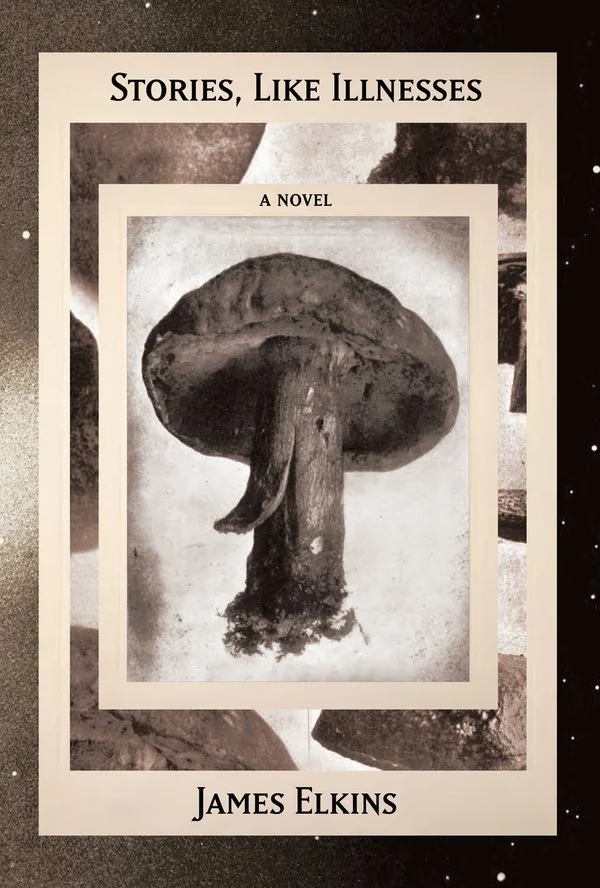
Stories, Like Illnesses, the opening book in my project and the latest to appear, has photos of lots of things—bats, bacteria, crystals, drills, engines, comets—all of which crowd in on Samuel’s imagination. That book is formatted in multiple columns, and images that occur to Samuel might appear anywhere: in the margins, in the middle of the page, or on both sides at once. The idea is to mimic the pressure Samuel feels, his inability to concentrate.
From my point of view, these kinds of inventions are the tip of a massive iceberg (there’s more online and in the nonfiction companion volume to Five Strange Languages). A tremendous amount is waiting to be done by authors who take their images as seriously as their writing. In each of the 10 books I’ve gathered here, images add something other than decoration or visual diversion: They speak to the text, and the text speaks back, creating a kind of fusion out of reach of prose or images alone. The result is a different kind of eloquence. My eye goes back and forth from the text to the image, checking details, noting how images and words are slant rhymes for each other, feeling the pull toward the image and then back into the text. I am ensnared by the page.
Bruges-la-Morte by Georges Rodenbach
The first work of fiction expressly designed by its author to have photographs. You can see it online, and there’s an English translation—more on that in a moment. It’s a very romantic story about a young rich widower who lives in Bruges. He’s disconsolate at the loss of his wife, and he wanders around the city, looking at the many canals and old stone houses. To him, they’re all images of his wife. In a sense she is the city, the deserted streets, the reflections of church spires in the canal. The photographs are mesmerizing: you read his thoughts, but you see the empty city in the photographs.Then everything changes when he sees a woman who looks like his dead wife.
About that English translation from Dedalus Books: Buyer beware! It has photographs taken by the translator that are entirely different from Rodenbach’s. His explanation is really odd: He says he was struck by how much the city in Belgium looks like the photos in Rodenbach’s original book, so he just substituted his own. That was, in my opinion, a terrible misjudgment, because Rodenbach carefully chose his own photographs to go with his story. So if you’d like to read this, just look at the original images as you go.
Nadja by André Breton
Breton, the theorist of surrealism, plays himself in this autofiction. He tells the story of his love affair with a strange woman named Nadja. She is eccentric, neurotic, and possibly unhinged. As a surrealist, he loves that. She says puzzling things that he relishes as poetry. The book is illustrated with photos that Breton commissioned of the places he and Nadja met.
It’s a strange book for several reasons. The story of Nadja is the middle part of the book. Breton opens with an essay, like the ones he wrote for the surrealists, giving his ideas on a range of subjects from art to capitalism. He then returns as an essayist in the third part of the book, which describes how Nadja suffered a breakdown, became psychotic, and was transferred to an asylum. It’s dispiriting, or worse, to read that Breton never visited her. From his point of view, she had gone beyond some boundary, and it seems he either no longer loved her, or felt he could no longer make contact with her. (Breton was also married in the period described in the book, and he hardly mentions his wife at all.)
You might assume, reading this book, that Nadja is fictionalized, and possibly even entirely invented. But she was real. She made strange drawings, which are online along with her letters to him. Breton reproduces a few in the book without saying how he got them, or what they might mean.
The Arrière-Pays by Yves Bonnefoy, translated by Stephen Romer
Bonnefoy, who died in 2016, was a French poet. To me, “back country” is poetic, both in English and in French: It conjures a landscape that’s overlooked, a place tourists don’t go, maybe inaccessible, probably deserted, possibly even unexplored. This is a dreamy book, with images of paintings and far-away places in Turkey, the Caucasus, Corsica, and Mexico. It’s in first person, but the narrator also calls himself “the author,” and he tells us stories about “the traveler.” Both of them dream, and after a while it’s difficult to distinguish places the author and traveler have been from places they’ve dreamed about.
The narrator loves paintings, and some are reproduced beautifully in color, so we can experience what he saw. The photos of landscapes are often in black and white. Bonnefoy explained that choice in an essay:
“Certain old photographs of monuments or villages clinging to hillsides, on the horizon. The photographs are old, not because the arrière pays belongs to the past but because such images, technically of poor quality, simplify what they represent, which one would otherwise understand too easily.”
I love the idea of photographs that won’t let us see everything, won’t allow us to fully understand. Otherwise they would lose the quality of dreams. This is a lovely book to lose yourself in, a great travel book for when you’re not traveling.
The Rings of Saturn by WG Sebald, translated by Michael Hulse
A wonderful, lonely, wandering book, about Sebald’s walking and driving tour around the often deserted coast of England near where he worked at the University of East Anglia. There are photos of marshes, inlets, beaches, and headlands, mixed in with historical photographs of places and people who lived in the area. Of all Sebald’s books, this one makes the best use of grainy, indifferently photographed views of empty landscapes, juxtaposed with photographs of grand buildings and portraits of writers. It produces a hypnotic and disorienting feeling of meandering along the coast and at the same time falling through history.
By 1995, after Vertigo and The Emigrants, Sebald had settled on a strategy for inserting photographs into his books. The Rings of Saturn is the most persuasive in that regard: it’s assembled in a very consistent way, and the images have predictable relationships with the narrative. Whenever possible, Sebald named the subjects of each photograph within two lines of the photo, either two lines before it, or two lines after. He did this in both the English and German versions of his book. The effect is that as we read, we sense or glimpse an image coming up, and just before we get to it, or just after we’ve looked at it, we find out what it is. This way of doing things makes it possible for the reading experience to be as smooth as possible: We read up to, over, and past images, rather than being arrested by them, or being asked to return to see details or check facts. (There are exceptions, like a Rembrandt painting and a horrifying photograph of a killing field at the Bergen-Belsen concentration camp.).
In terms of images this is the best introduction to Sebald, because it shows his practice most clearly and makes best use of black and white photographs.
The Xenotext by Christian Bök
This book, published in 2015, makes tags like “experimental” and “adventurous” seem tame. Bök (pronounced “book”) is a Canadian writer now teaching in Leeds. For over 20 years he worked on what the artworld calls “bioart”: He engineered genetic material to make artworks out of living organisms. A small but dedicated number of artists have done this for some time. (Try googling Eduardo Kac, Joe Davis, or Adam Zaretsky.) Bök is a writer, and even though he immersed himself in the science, his goal is actually poetry. In the past, some bioartists have coded messages and even images into DNA, which has then been put into organisms like bacteria, so that each bacterium has a copy of the text or image. Bök has higher aspirations: He has written a poem, encoded it into DNA, and then arranged the genetics so that the bacterium will “read” the DNA (like cells always do) and produce genetic material in response that will be another poem. The bacteria become poets. Book 2, which appeared in 2025, has the project’s conclusion.
Okay, that’s the setup. The first book, The Xenotext, introduces the project, and it does so in a very poetic way. There is some science in it, but not enough to be off-putting. It opens, without any explanation, with several long verse chapters, written in a quirky mixture of old-fashioned grandiloquence (“What dire seed must these onslaughts have scattered, like shrapnel, across your cremated badlands”) and contemporary science. Another part of the book is, almost unaccountably, a translation of Virgil’s fourth Georgic. Then come all sorts of amazing inventions: pages of constrained writing, poems made in the shape of molecules, computer-generated diagrams of proteins. Of all the books written with images, this is the most radical. It’s not easy! But you won’t ever forget it.
Nox by Anne Carson
Because Anne Carson is so well known, the publisher was able to keep the original price of Nox below 30 dollars. Hopefully now that she’s won the Nobel Prize, there will be a reissue. Even at its current price, it’s a bargain for a large, sturdily constructed box, containing an accordion book that folds out—if you have the space—over 30 feet long. Similarly formatted artist’s books sell for hundreds of dollars.
Yet this isn’t quite an artist’s book, which by definition can be read in any order. It tells two stories, which make sense best if they’re read from the first accordion page to the last. Every third or fourth page is an explanation of a single Latin word, and the words follow the order of a Latin poem with which Carson opens the book. The other pages are collages of letters, photographs, drawings, and text, all reproducing a notebook Carson kept. From those pages we learn the book is a way of mourning her estranged brother, who had died. Halfway through the book she explains the poem: It’s an ancient Roman poem by Catullus, about the death of his brother. Carson offers her own translation of Catullus’s poem two-thirds of the way through the book.
The collaged pages are intimate, spontaneous, and impassioned. We learn through fragments just how little Carson knew her brother. She reacts by tearing up one of his few letters, and taping and gluing drawings and photos onto the pages. The pages about the words in Catullus’s poem are dense and melancholy, and I have the impression some reviewers skipped them—but they have a wonderful chilling, slowing effect on the reading. Nox is an intimate diary, reassembled and scanned for public viewing, and it embodies the conflict of every writer who has a private and painful experience that somehow needs to become a beautiful book.
Seven Controlled Vocabularies by Tan Lin
If you like your illustrated books odd and experimental, this is a great choice. You get a sense of its strangeness from the full title, Seven Controlled Vocabularies and Obituary 2004: The Joy of Cooking. It exists as a paperback but it was also “republished” at an event at the University of Pennsylvania on April 21, 2010, at which several dozen people contributed their own texts, which are now officially also parts of the book.
What makes Tan Lin’s project so unusual is that its images aren’t meant to be beautiful or even striking. He reproduces all sorts of things—the back of a utility bill, a New York City Metro card, a photo he found in a flea market—and the pictures are often small, with lots of white space around. Even the cover is deliberately not striking, with its big bar code and lack of image. The text is a series of short essays, many just one paragraph long.
One titled “PRADA” is a brief meditation on the way fashion logos aren’t actually read. You “read” the Prada initials on a Prada bag, but “not in any meaningful way. After all, who has really read a bag by Louis Vuitton”? Below the “PRADA” paragraph is a small image, which seems to be a credit card or electronic pass card. Tan Lin’s point is that we all live in a world of texts and images that we barely notice. “What are the forms of non-reading?” he asks at the beginning. We glance at many visual objects around us, so why not glance at writing too?
At the same time there are intensely written pages and fascinating images, because that’s the way it is in the world: Some things are too boring to look at even for a second, and others can hold our attention for a lifetime.
Blind Spot by Teju Cole
Cole is a Nigerian-American novelist, photographer, and theorist, who became known to many people with his book Every Day Is for the Thief, and to a different public when he wrote a column on photography for The New York Times. He is currently the Gore Vidal Professor of the Practice of Creative Writing at Harvard. This book is a collection of his photographs, with explanatory text on facing pages. He takes up Sebald’s theme of the wandering narrator, who records what he sees; but Cole travels much more widely than Sebald did. Like Sebald, he is focused on tragedies of the past, but again much more diverse than Sebald’s interest in the Holocaust. Blind Spot mentions Balinese, First Nation, German, Syrian, even Swiss genocides. And unlike Sebald during most of his lifetime, Cole is famous enough to afford full-color reproductions, and his images have nothing of Sebald’s nostalgic grayscale haze.
Of all the writers in the current generation influenced by Sebald’s example, Cole has gone the farthest. Perhaps the quality that’s most distant from Sebald is Cole’s propensity to tell us what’s in his photographs. Several times he leads us through his images, like the teacher that he is, pointing out details and meanings. Sebald never talked about his camera or his choice of lenses in his books (later investigators have found out about those, and now there’s a Sebald archive where the unused photographs can be studied). Cole takes you through his travels, tells you what he’s discovering, and informs you about how he made his pictures. It’s a new strategy in autofiction with images.
Citizen by Claudia Rankine
Rankine is passionate and committed about the problems of everyday life in America as a Black woman, and she has been resourceful in thinking of ways to educate readers about microaggressions and the whole suite of racist attitudes that are often unwittingly, and sometimes deliberately, inflicted on her and other people of color on an everyday basis. This book, published in 2014, uses images in more interesting ways than the earlier Don’t Let Me Be Lonely (2004), where photos were often optional ornaments to the text.
Here she illustrates her stories about prejudice, bullying, and thoughtlessness with artworks made by Black American artists including Carrie Mae Weems, Nick Cave, and Glenn Ligon. They make a curious contrast with the narrative: On one page you might read about unthinking racism on show at a grocery checkout line, and on the next see an artwork that has been internationally reviewed and sometimes bought by museums or sold to collectors.
Other images are completely different: There’s one of Caroline Wozniacki pretending to be Serena Williams, one of Hennessy Youngman, and several of ordinary outdoor scenes. The disparities are thought-provoking, especially because they aren’t mentioned in the text, which is acutely tuned to people’s lack of self-awareness about their attitudes and assumptions.
I’m Trying to Reach You by Barbara Browning
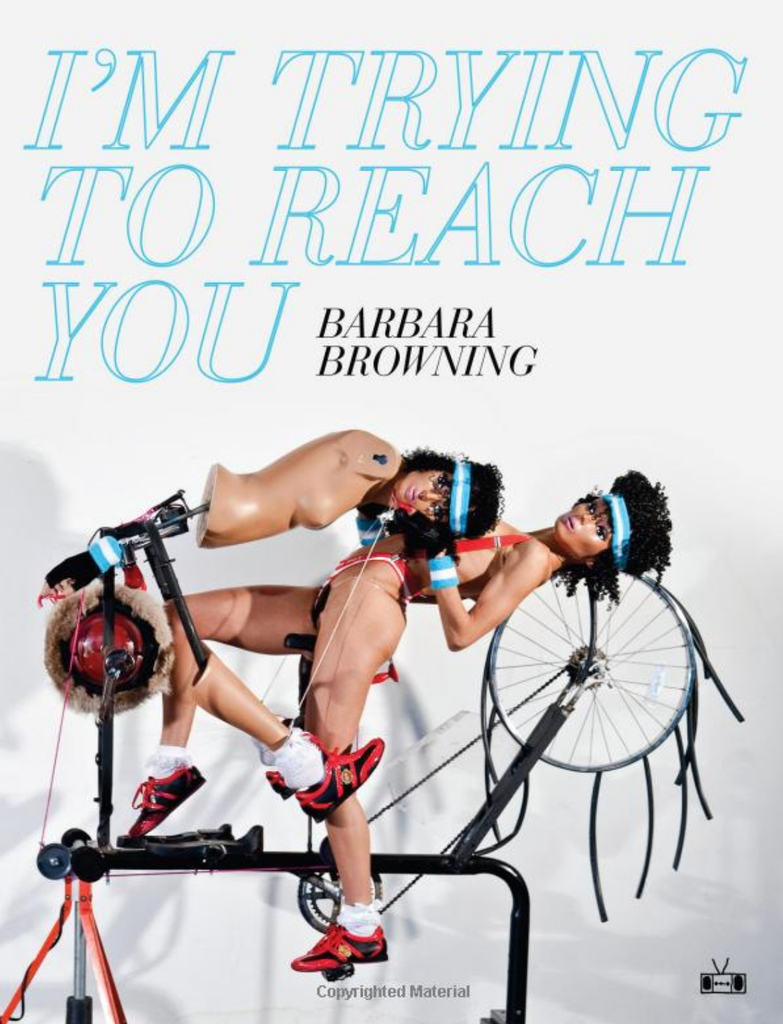
This is a wild ride, not least because it tries to combine a book with videos. It has ordinary photos (mostly cell phone pictures) but also screenshots from Youtube videos. On the dedication page there is a QR code and the note: “All of the moth’s videos can be viewed at: www.youtube.com/AhNethermostFun/.”
As the plot unfolds, “the moth’s” videos turn out to be central, and so do users’ comments on Youtube, some of which are quoted in the book. It is possible to read the book without looking at the videos online, but the reading experience is more interesting if you check the videos as you read. Otherwise all you see are grayscale screenshots and descriptions of scenes in the videos.
If you do look online, you’ll also notice how many times the videos have been viewed—something you can’t do with an e-book or Kindle. The first of the book’s 12 videos has by far the most views: In April 2014, when I first looked, it had 1,011 views. In 2019, when I taught the book the second time, it had 1,500, and recently it was approaching 1,900. The number of views falls quickly for the other videos, suggesting not all readers made it to the end of the book. (Browning makes the veil between her novel and real life even thinner by including a double author’s photograph that has a very strong resemblance to the dancer called “the moth” in the videos.)
As I read I keep going back and forth between the book and the videos. I haven’t read it on Kindle, but I assume there it would be more like a hyperlinked digital text. I bet it’s more memorable as a paperback precisely because of the mismatch between the digital and the analog.


